Best Sourdough Tools -Some You Need & Some You Don’t

Wondering which sourdough tools are worth it? This guide shares the best sourdough baking tools—some essentials and some extras you don’t really need.
When I started sourdough, I felt like I needed to buy all the gadgets, but the truth is—you can bake amazing bread with just a few essentials. There’s something freeing about realizing that good, crusty bread doesn’t come from a drawer full of tools but from a patient process, a little practice, and a healthy starter.
Remember, this is where I fell in love with baking from scratch, and was the beginning of it all!

In this post, I’m sharing the sourdough bread tools that actually make baking easier, along with the ones you can skip. My hope is to help you keep your home kitchen simple and stress-free so you can focus on what matters—enjoying the process, feeding your family, and baking bread that feels like home.
If you’re just starting your sourdough journey and need help building your own sourdough starter, I’ve got you covered—grab my Free Sourdough Starter Guide before you get started.
The Must-Have Essentials for Every Sourdough Baker
There’s no denying that certain tools make sourdough bread baking smoother. Whether you’re working with sticky dough, shaping your first loaf, or slicing into your final crusty bread, these essentials will help you from start to finish.

Mixing Bowl & Spoon/Spatula—It all begins here. You’ll need a large mixing bowl—something big enough to hold your dough as it rises during bulk fermentation. Glass, stainless steel, or even a large plastic bowl will do. I personally love using glass containers because you can see your dough rise from the sides, and it helps you track progress at room temperature.
Pair that with a wooden spoon or a sturdy silicone spatula for mixing your ingredients. A flexible bowl scraper also helps to lift and fold wet dough, which can otherwise cling to the sides. Mixing doesn’t have to be fancy—just keep your tools simple, clean, and functional.
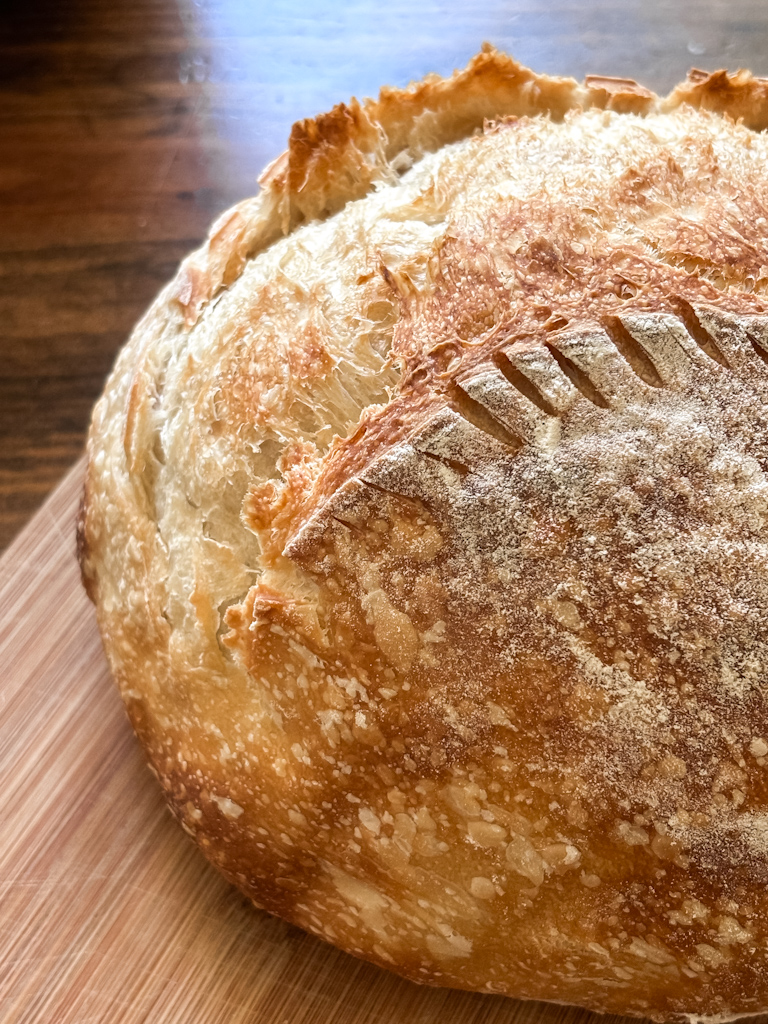
Dutch Oven or Baking Vessel—If I had to choose just one “most essential tool” for sourdough bread baking, it would be a cast iron Dutch oven. The heavy lid traps steam and creates that signature crusty boule with a deep golden crust and a soft, chewy interior.
You can use almost any type—Le Creuset, Lodge, or even a no-name brand. The key is that it can handle high temperatures and hold in steam. Some bakers also love the Challenger Bread Pan, which is specially designed for sourdough loaves.
But don’t feel pressured—if you don’t have a Dutch oven, a covered roasting pan or even a pizza stone with an inverted pot over the top can work beautifully.The best thing about sourdough is that it’s forgiving—you can improvise and still get an incredible loaf of sourdough bread.

Sharp Knife or Bread Lame—When your dough proofs and you’re ready for that final shape, scoring is what allows your bread to expand beautifully in the oven. For that, you’ll need a sharp blade.

A bread lame (sometimes called a razor blade tool) helps create precise cuts and intricate designs if you love the artistic side of baking. A Wire Monkey lame or any simple razor blade attached to a handle works well. But honestly, a good bread knife or sharp kitchen knife can do the job too.
The goal isn’t perfection—it’s about giving your dough room to open up into a crusty, golden loaf.

Starter Jar with Lid—This is one of those simple but absolutely essential items for every sourdough baker. You’ll need a clean, clear container to keep your own sourdough starter healthy and active.

A mason jar, Weck jar, or even a glass jar from your pantry works just fine. I love Weck jars because they’re both beautiful and functional—you can cover them with plastic lids, a tea towel, or even a piece of parchment paper with a rubber band.
If you like to keep things tidy, you can also use cambro containers with straight sides. It makes it easier to track your starter’s rise and mark the level with a rubber band.
You don’t need anything fancy here—the best tool is the one you’ll actually use in my opinion!
Tools That Make Baking Easier (But Aren’t Required)
Once you have your core tools, there are a few extras that can make your sourdough baking a little smoother—especially if you bake often or work with larger batches of dough.

- Banneton Baskets—These are beautiful, and there’s no denying that banneton baskets help shape your sourdough loaves into uniform rounds or batards. They’re great for presentation and can help your dough hold its structure during the second rise. But if you’re on a budget, don’t stress—a large bowl lined with a flour sack towel or dish towel dusted with white rice flour works just as well. Banneton baskets are a nice-to-have, not a must.
- Bench Scraper—This is one of my favorite tools for handling sticky dough. A bench scraper (or bench knife) helps lift and fold dough cleanly off your work surface, portion dough, or shape it into rounds. It also keeps your countertop tidy. There are different materials available—stainless steel, plastic, or wood—and I like stainless steel because it’s durable and easy to clean.
- A dough scraper or flexible bowl scraper also helps during mixing and shaping stages.
- Thermometer—A digital kitchen scale might not be essential (more on that below), but a thermometer—especially an instant-read thermometer—can be helpful for checking the doneness of your bread.
- Dough Whisk—The Danish dough whisk is one of those tools that, once you have it, you wonder how you baked without it. It makes mixing bread dough so much easier because it cuts through wet dough without overworking it. It’s perfect for those early mixing stages before kneading or stretching and folding. It’s not essential, but it’s definitely handy—especially if you bake multiple sourdough recipes each week.
The “Nice to Have, But Not Necessary” Tools
This is where the world of sourdough baking can start to get a little… extra. There are so many fun tools out there—baking steels, pizza stones, bread slicers, and specialized tools for aesthetic purposes like scoring kits and stencils.
- Bread Slicer or Guide—If you love uniform slices for sandwiches or toast, a bread slicing guide can be fun to have. But a good quality bread knife will do the job just as well.
- Specialty Baking Stones or Steaming Trays—A baking steel or pizza stone can help you achieve great oven spring and crisp crusts, especially for baguettes or homemade breads baked outside a Dutch oven. But again, not required.
Would you like to save this?
I always remind myself—and you—that simplicity is part of the joy. The fewer steps between you and a warm loaf of crusty bread, the better.
What I Actually Use in My Kitchen
I simple love this list below because it’s where practicality wins. I’ve tried a lot of tools over the years, but what I actually rely on—especially as a busy mom with a full life—comes down to just a few items.


- A sturdy large mixing bowl
- A wooden spoon or Danish dough whisk
- A bench scraper
- My Dutch oven (which I use for everything, not just bread!)
- A few mason jars or Weck jars for my starter
- Parchment paper or Bread Sling for easy transfer into the hot Dutch oven
- A bread lame or sharp knife for scoring which makes beautiful scoring on the prebaked dough.
- Tea towels and flour sack towels for covering and proofing
- Banneton Baskets for proofing. I have a few of these so I can make multiple loaves at a time.
- And my trusty good bread knife for slicing that first warm piece of sourdough–makes a difference!
Even with kids running through the kitchen, these tools are all I truly rely on to bake the best sourdough bread for our family.
Sourdough doesn’t have to mean a cluttered countertop—it can be as simple as flour, water, salt, and starter… and a few humble tools that help you bring it all together.
Sourdough Tools I Don’t Recommend
Here’s where I like to get real. There are a lot of tools marketed as “must-haves,” but some of them just take up space.
I don’t recommend overpriced starter kits that come with tools you’ll never touch, or duplicate gadgets that serve the same purpose.
And while a digital scale or kitchen scale is helpful for precision, I’ll be honest—you can make great bread for your family without it. You don’t need to measure every gram to build a sourdough habit that lasts.
If you’re baking in your own kitchen with love and intention, that’s enough. You don’t need tools that clutter your counter without improving your bread.
Other tools that tend to add clutter rather than value include:
- Plastic proofing domes
- Overly decorative bannetons that can’t handle wet dough
- Fancy scoring stencils for aesthetic purposes only
- Starter “feeding tools” that you’ll never use again
Sourdough is beautifully simple. You don’t need a gadget for every step—you just need confidence and consistency.
How to Start with What You Already Have
One of the best things about sourdough is that you can start right where you are. Don’t delay baking because you think you need every shiny tool first.
Here are a few easy swaps:
- No banneton? Use a bowl lined with a dish towel and dusted with white rice flour.
- No bread lame? A sharp knife or razor blade works perfectly.
- No Dutch oven? Bake on a pizza stone or baking steel with a tray of water underneath for steam.
- No dough scraper? A rubber spatula or even floured hands can move dough just fine.
The point is: start where you are. Sourdough is a journey, not a race.
Your first loaf of sourdough bread won’t be perfect, but each bake teaches you something new about texture, fermentation, and timing. And before long, your family will be asking for that next warm, golden loaf—and you’ll be proud knowing you made it with your own hands and a few simple tools.
More Sourdough Resources
If you’re feeling inspired to start (or restart) your sourdough journey, I have a few resources that will make things easier:
- Free Sourdough Starter Guide – learn how to make your own starter from scratch using flour and water.
- Beginner Sourdough Course – step-by-step lessons to help you bake with confidence.
- Holiday Baking with Sourdough E-Book – packed with cozy, festive sourdough recipes for the whole family.
- Related posts: How to Feed and Maintain Your Starter Guide, 9 Sourdough Discard Recipes for Beginners, Seasonal Sourdough Recipes, How to Shape your Sourdough for Baking
Final Thoughts
The world of sourdough baking is full of options, tools, and gadgets—but at its heart, it’s simple. All you truly need is a few reliable tools, good flour, time, and a little love.
The right tools aren’t the ones that fill your drawers—they’re the ones that help you build rhythm in your kitchen, shape your bread dough with care, and bake loaves that bring your family to the table. I have learned this over the years as I have learned the process of baking from scratch–specifically with sourdough breads,
Whether you’re a seasoned baker or just beginning your sourdough journey, remember this: the beauty of sourdough lies not in perfection but in practice–I know this all too well! It’s in the feeling of your hands shaping dough, the smell of freshly baked bread filling your home, and the joy of sharing something homemade with the people you love most.
So start where you are. Don’t be intimidated or feel like you have to wait to get all the right tools to start your sourdough journey. Grab that large bowl, feed your starter, and preheat your best Dutch oven. The rest will come naturally—with time, practice, and a few well-loved tools by your side.
You’ll learn the process quickly and will also find tools specific to your liking! Don’t be afraid to use different tools or ones that best fit your personality as you tackle the sourdough world. I hope you come to love the process and the ways to form a love for sourdough baking like I have.
Want more delicious recipes or guides sent straight to your inbox? Subscribe to my newsletter to receive the latest!
If you make use the resource, please leave a rating on the blogpost below! I’d also love for you to tag me @autumn.chasingoursimple on Instagram so I can see what you’ve been baking and creating with these tools!