Sourdough Discard English Muffin Recipe

This sourdough discard English muffin recipe is simple, fluffy, and delicious—perfect for breakfast or brunch. A quick, from-scratch recipe to use up extra starter that proves sourdough doesn’t have to be complicated.
There’s something about cooking these homemade sourdough English muffins in the morning that feels grounding. The gentle sizzle in the cast iron skillet, the smell of warm butter, and that first golden brown muffin cooling on the wire rack—it’s all a reminder that simple, slow food is still possible even in a busy home.

I love turning discard into something useful, and these muffins are a favorite. They’re soft, chewy, and so easy to make ahead for busy mornings. It’s a recipe that proves sourdough can fit seamlessly into real family life.
What You’ll Love About This Recipe
If you’ve ever wanted to make English muffins from scratch, this is your sign to do it. They’re light, tender, and have that perfect sourdough flavor.
Here’s why I love this easy recipe, and I think you will too:
- Uses up sourdough discard (no waste!)
- Can rest overnight while you sleep for a slow, flavorful bulk fermentation
- Cooked on the stovetop instead of in the oven
- Perfect for making ahead and freezing for quick breakfast sandwiches
- So much better than Thomas’ English muffins
Even if it’s your first time making homemade English muffins, this process is straightforward, fun, and incredibly rewarding.
This post may contain affiliate links, which means I may earn a small commission at no extra cost to you if you make a purchase through these links. I only recommend products I personally use and trust. Your support helps keep this blog running—thank you!
Key Ingredients
You can find the complete list of ingredients in the recipe card at the bottom of this post, but here’s a quick look at what you’ll need and why.

- Whole Milk: Gives softness and flavor to the dough. Use warm milk or room temperature milk for best results.
- Sourdough Discard: Adds tang and that distinct sourdough depth. You don’t need an active sourdough starter for this one—discard works perfectly.
- All Purpose Flour: Creates that fluffy interior texture we all love.
- Yellow Cornmeal: Sprinkled on the outside for that signature crunch.
You can find a full list of ingredients in the recipe card located at the bottom of this post.
How to Make Sourdough English Muffins
This is the heart of the recipe, and it’s surprisingly simple. No fancy equipment needed—just a large bowl, a cast iron skillet (or an electric griddle), and maybe a biscuit cutter or cookie cutter for shaping.
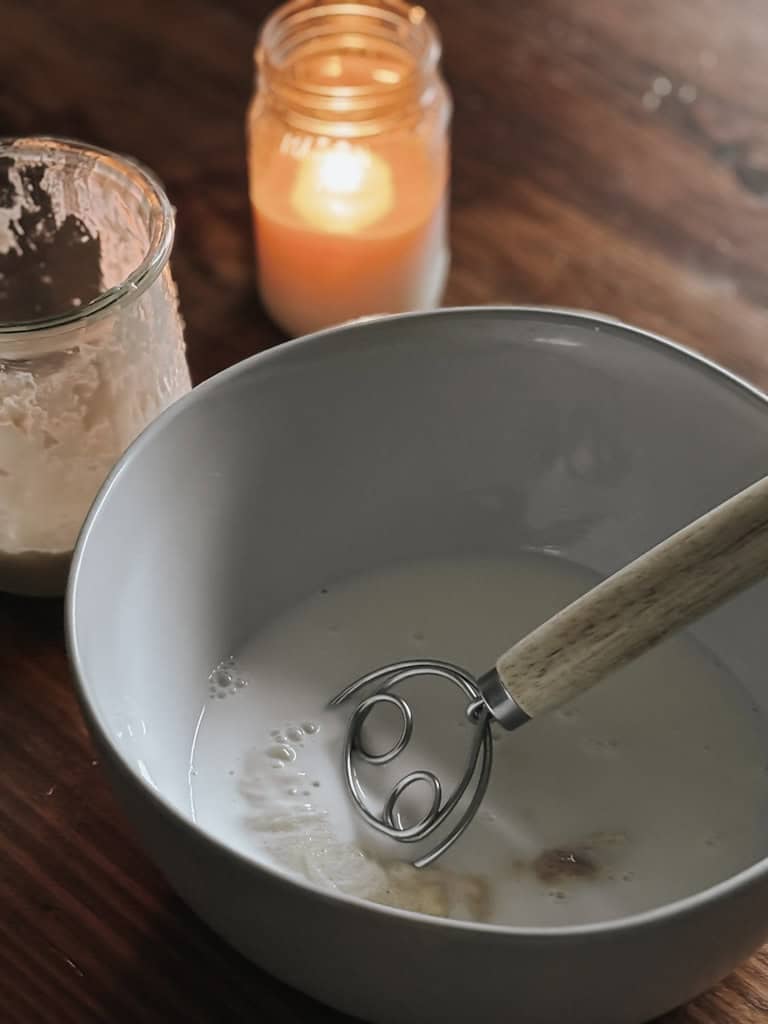
Mix the Dough—In the bowl of a stand mixer, combine whole milk, sourdough discard, sugar, and salt. Stir together, then add your flour. Using the dough hook attachment, knead for 2–3 minutes until a soft, sticky dough forms.

If you don’t have a stand mixer, knead by hand for about 5 minutes on a lightly floured surface. It should feel tacky but not too wet. Avoid adding too much extra flour—it’s better to have slightly sticky dough than dense muffins.
First Rise (Overnight or 8–12 Hours)—Transfer the dough to a lightly greased bowl (brushed with oil or melted butter) and cover with plastic wrap or a tea towel. Let it rest overnight, or for 8–12 hours at ambient temperature in a warm place.
This slow first rise (or bulk fermentation) is where the flavor magic happens. The dough will puff up slightly and have a few bubbles on the top of the dough by morning.
If you’re making these in the evening, just let the dough sit on the counter overnight—no refrigeration needed.
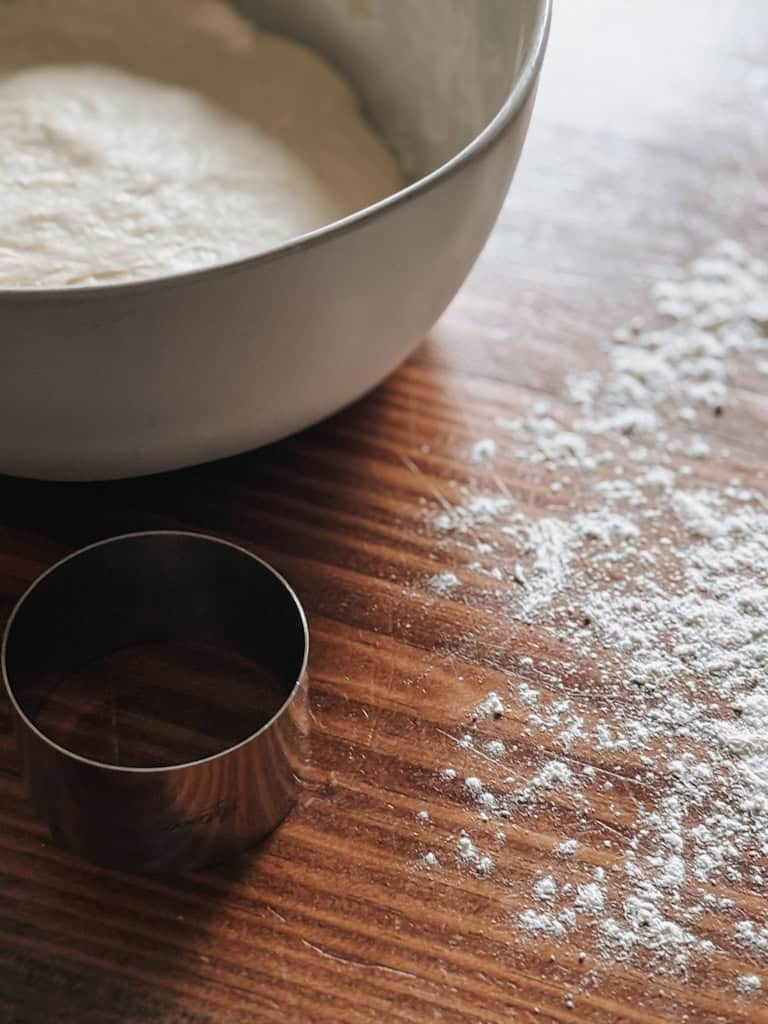
Shape the Muffins—The next morning, gently turn the dough out onto a lightly floured work surface. Roll or pat it out until it’s about ½ to 1 inch thick.
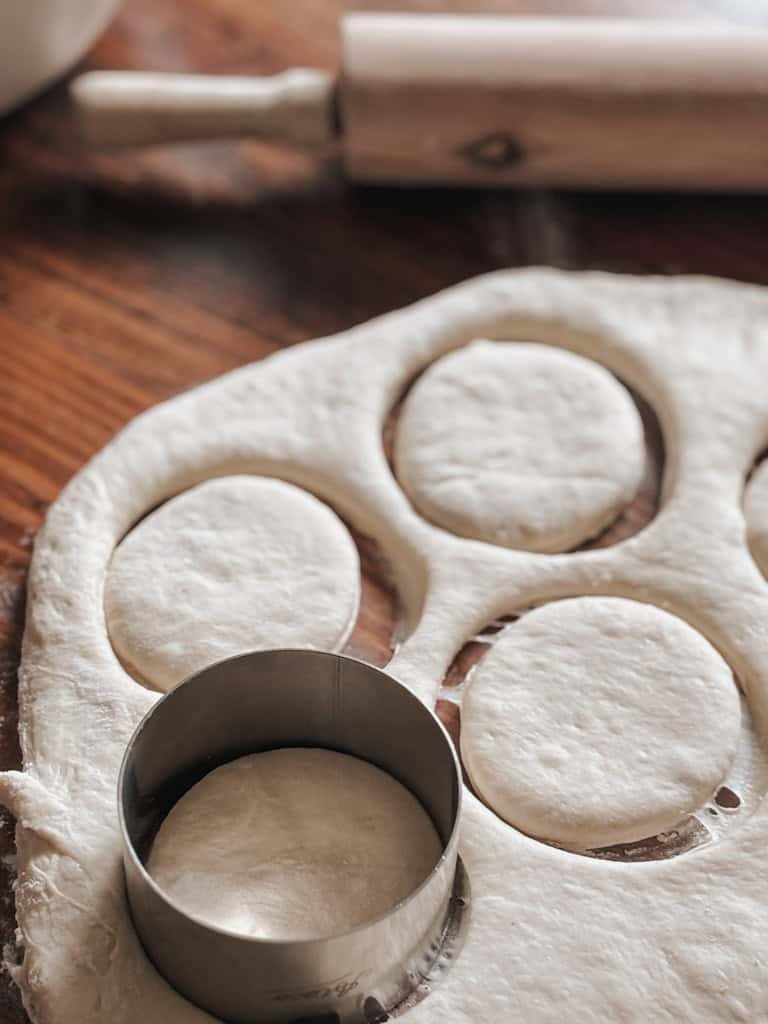
Use a biscuit cutter or even a cookie cutter (or the lid of a wide-mouth jar) to cut out circles. Aim for 10–12 equal pieces of dough.
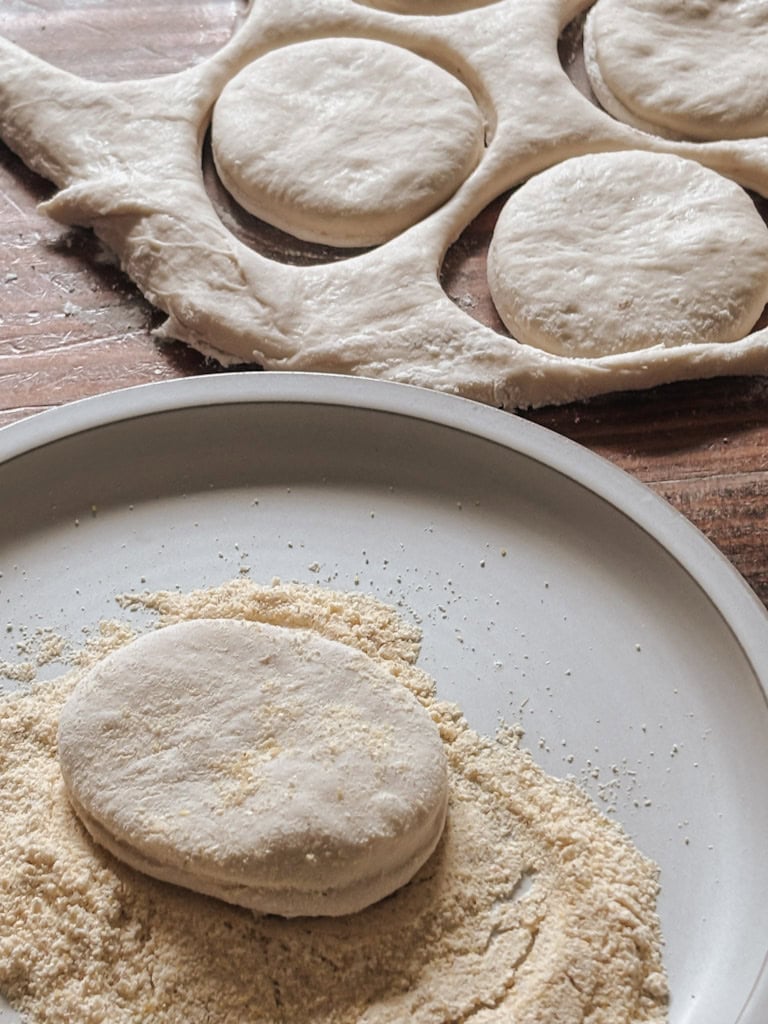
Transfer the cut muffins onto a parchment-lined baking sheet or cookie sheets sprinkled with cornmeal. Cover with a tea towel or plastic wrap and let them rest again for 30–45 minutes for their second rise.
This extra rest helps the muffins stay light and fluffy.
Cook the Muffins—Preheat your cast iron skillet, electric griddle, or frying pan over low heat. Brush lightly with melted butter or oil.
Dip each muffin in cornmeal on both sides, then place 4–5 muffins in the skillet, spaced about two inches apart.
Cover with a lid or baking sheet to trap steam. This helps cook the inside while keeping the outsides a beautiful golden brown.
Would you like to save this?
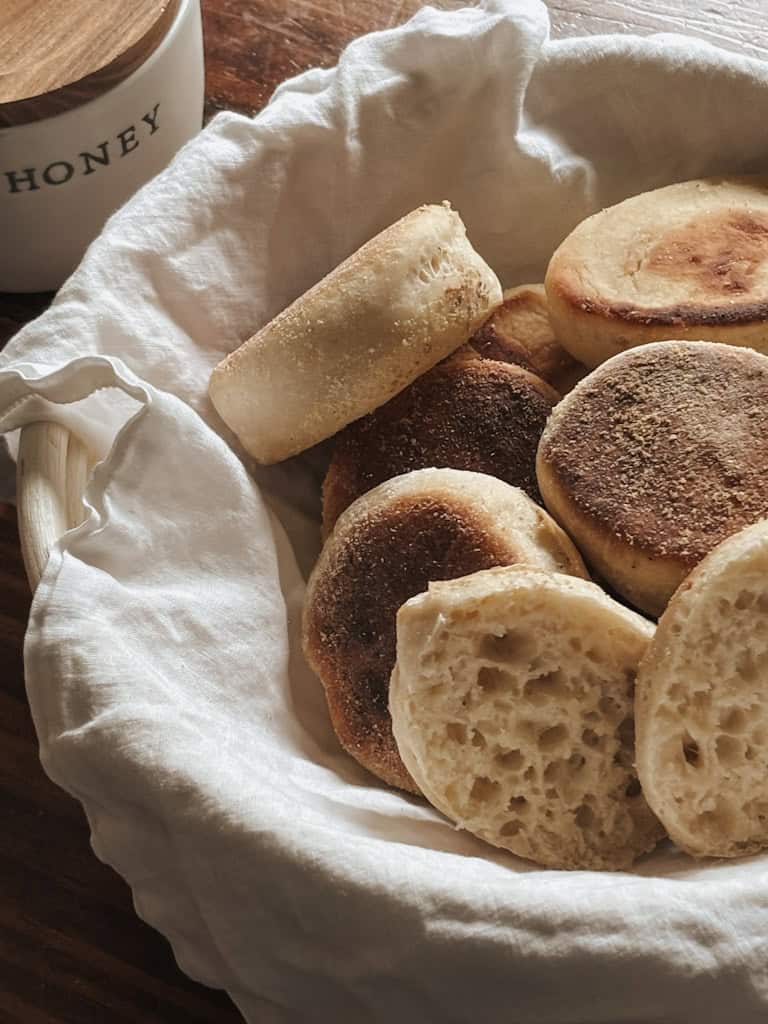
Cook each side for about 4 minutes. Place them on a wire rack to cool completely before slicing. (If you slice while they’re hot, the texture can get gummy.)
Ways to Serve Sourdough English Muffins
These muffins are versatile and can be used in so many delicious ways! Here are a few of my favorite ways to enjoy them:
- Breakfast sandwiches: Split, toast, and layer with eggs, bacon, and cheese for a hearty morning meal.
- With butter and honey: Simple and classic—soft on the inside, crunchy on the outside.
- English muffin pizzas: Spread with sauce and cheese for a quick lunch or snack.
- Peanut butter and jam: Perfect for kids or after-school snacks.
You can even turn them into garlic toast or mini sandwiches—whatever fits your family’s day which is another things I love about this recipe!
Tips and Variations
These little rounds of bread are wonderfully forgiving, but here are some tips to help you get the best results every time:
- Keep the heat on low heat—slow cooking ensures the centers finish without burning.
- Don’t overwork your dough; handle it gently to keep the texture soft.
- Let the dough rise in a warm place to encourage fermentation.
- Use whole wheat flour for half the recipe if you want a nuttier, heartier flavor.
- Sprinkle extra cornmeal on your parchment paper for an easier transfer.
- Try adding a handful of cranberries or raisins to the dough for a fun twist!
And remember, every batch gets better, so don’t give up! Once you get comfortable with the process, you can experiment with shapes, flavors, and thicknesses.
How to Store English Muffins
- Once cooled, store your muffins in an airtight container at room temperature for up to 4 days.
- If you want to store them longer, slice or leave them whole and freeze inside a plastic zip-top bag for up to 6 months.
- When you’re ready to enjoy one, pop it straight into the toaster or warm it on your electric griddle. They reheat beautifully, keeping that soft interior and crispy exterior.
Recipe FAQs
Yes! You can swap active starter for discard—just know that the muffins may rise a bit more.
Check your ambient temperature—if your kitchen was too cool, the dough might need more time during the first rise or second rise.
Yes! You can bake them on a parchment-lined baking sheet at 350°F for about 12–15 minutes. But the best part of these muffins is that signature skillet browning, so I recommend stovetop cooking if possible.
A cookie cutter, mason jar lid, or even shaping by hand works just as well!
No, but they can help if you want perfectly shaped muffins that look like standard English muffins from the store.
More Sourdough Breakfast Recipes
If you loved these sourdough discard English muffins, here are a few more sourdough recipes to try next:
- Sourdough Pancakes – light, fluffy, and full of flavor.
- Sourdough Cinnamon Rolls – sweet, soft, and perfect for weekend baking.
- Sourdough Popovers – airy and crisp with a soft interior.
- Sourdough Peanut Butter Cookies – chewy, nostalgic, and made with discard.
And don’t forget to check out my discard breakfast post for more ideas to use up extra starter!
How to Make Sourdough English Muffins (Step-by-Step Recap)
Just to summarize the process before you dive in:
- Mix ingredients in the bowl of a stand mixer (or by hand).
- Let the dough rest overnight (about 8–12 hours) in a lightly greased bowl covered with plastic wrap.
- Roll out the dough on a lightly floured work surface and cut with a biscuit cutter or cookie cutter.
- Let them rest on a parchment-lined baking sheet for a second rise.
- Cook on low heat in a cast iron skillet or electric griddle until golden brown on both sides.
- Cool on a wire rack before slicing.
Every step builds flavor and texture—so don’t rush it. The next day, you’ll have soft, tangy, perfectly chewy homemade English muffins ready to enjoy.
The Health Benefits of Sourdough
One of my favorite things about baking with sourdough is its natural goodness. Sourdough fermentation offers real health benefits—it helps break down gluten, reduces phytic acid, and makes nutrients more bioavailable.
It’s easier to digest than commercial yeast breads, and when you use a blend of white flour and whole wheat flour, you get the best of both worlds: soft texture and wholesome nutrition.
Sourdough baking also connects you to tradition. Recipes like these are a reminder that food made slowly, with care, always tastes better.
Wrapping It All Up
Homemade sourdough baking doesn’t have to mean complicated schedules or endless steps. This Sourdough Discard English Muffin Recipe fits perfectly into real life—mix it, rest it, and cook it up fresh the next morning.

Every time I make these, I’m reminded how sourdough invites us to slow down, connect, and create something nourishing with our hands. The best part is that you can make them again and again with nothing more than a little discard and a few pantry staples.
Whether you use them for breakfast sandwiches, eggs benedict, or just with butter and jam, these homemade sourdough English muffins are going to become a new favorite in your kitchen.
Want more delicious recipes sent straight to your inbox? Subscribe to my newsletter to receive the latest!
If you make this recipe, please leave a rating on the recipe card below! I’d also love for you to tag me @autumn.chasingoursimple on Instagram so I can see what you’ve been baking!

Sourdough Discard English Muffin Recipe
Ingredients
- 1¼ cups whole milk
- ½ cup sourdough discard
- 2 tsp sugar
- 2 tsp salt
- 3 cups all purpose flour
- yellow cornmeal for sprinkling
Instructions
- In the bowl of a stand mixer, combine milk, discard, sugar, and salt.
- Add flour and knead for 2-3 minutes with the dough hook attachment or on the counter for 5 minutes.
- Don't have a stand mixer? No problem. Just knead the dough by hand for about 5 minutes.
- Cover the bowl, and let it sit over night or for 6-10 hours. No need to refrigerate.
- Turn the dough out onto a lightly floured surface and roll it out until it’s about 1/2 to 1 inch thick. Using a biscuit cutter to the lid to a wide mouth jar, cut as many English muffins as possible.
- Preheat your non-stick skillet over LOW heat and add a little oil or butter to the pan. Dip english muffins in cornmeal and place 4-5 muffins into the skillet spaced about 2" apart, cover and cook each side for 4 minutes.
- Cool before slicing!