How to Feed & Maintain a Fresh Milled Sourdough Starter

Learn how to feed and maintain a fresh milled sourdough starter with simple, beginner-friendly steps. This guide combines sourdough baking with freshly milled flour for a healthy, active starter.
Over the years, I’ve fallen in love with two things in my kitchen: sourdough baking and fresh milled flour. What started as curiosity during a season of learning how to make a simple loaf of sourdough bread slowly turned into something deeper.
I realized that baking bread from scratch wasn’t just about the bread itself—it was about understanding ingredients, slowing down the process, and nourishing my family in a meaningful way.
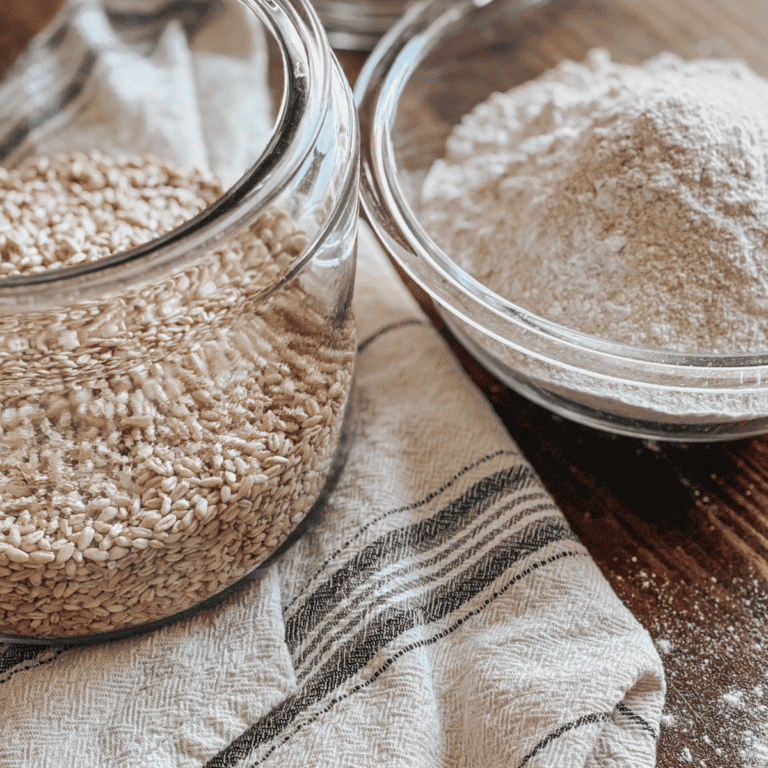
Fresh milled flour became the natural next step for me. Milling my own flour from whole wheat berries felt like unlocking another layer of flavor and nutrition in my baking.
And when I combined that with sourdough, it was like the two things were always meant to go together. The natural fermentation process thrives on the nutrients found in fresh flour, and the results are beautiful.
If you’ve already started your own sourdough starter—or you’re thinking about creating your own starter—learning how to feed and maintain it with fresh milled flour is one of the best things you can do for it. In this guide, I’ve combined both of these passions to show you how to feed and maintain a sourdough starter using freshly milled grains.
With a few simple habits and an understanding of how fresh flour behaves, keeping a strong, bubbly starter becomes easy—and it opens the door to some truly nourishing homemade bread.
And I promise: it’s not complicated. Once you understand the rhythm of feeding and the signs of fermentation, maintaining a fresh milled sourdough starter becomes second nature. Here’s my post on starting your Fresh Milled Sourdough Starter—a good starting point!
What Is a Fresh Milled Sourdough Starter?
A sourdough starter is a simple mixture of flour and water that captures wild yeast and beneficial bacteria from the environment. Over time, those natural microorganisms begin feeding on the sugars in the flour, creating fermentation activity that gives sourdough its rise and flavor.
At its core, a sourdough starter is truly a living thing. It’s constantly changing, growing, and responding to its environment—things like ambient temperature, hydration, and the type of flour you feed it all influence how it behaves.
When you make a flour sourdough starter using freshly milled grains instead of store-bought flour, you’re giving that living culture an incredible boost of nutrients. Fresh milled flour still contains the bran and germ of the wheat berry, which means more minerals, enzymes, and natural yeast are present.
That’s a big difference from flour that has been sitting on store shelves for months. Starters fed with purpose flour or white flour will still work beautifully, but fresh milled sourdough often shows stronger fermentation activity because the yeast have more nutrients to feed on, does that make sense?
Benefits of Using Fresh Milled Flour
The benefits of using fresh milled flour in your starter include:
• More nutrients and natural yeast
• Faster fermentation
• Better flavor development
• A stronger, more resilient starter
I’ve personally noticed that my fresh milled sourdough starter becomes active much faster than starters fed only with store flour. The extra nutrients in the whole grain flour really fuel the natural fermentation process. If you’re just starting out, you can read my full guide to creating a fresh milled sourdough starter where I walk through building a new starter from scratch.
Best Flour for a Fresh Milled Sourdough Starter
One of the most common questions people ask is: “What type of flour should I use?”

When feeding a fresh milled sourdough starter, the best grains are typically hard wheat varieties because they contain higher protein levels.
My favorite options are:
- Hard white wheat
- Hard red wheat
- Whole wheat blends
In my own kitchen, I typically use a 50/50 blend of hard red wheat and hard white wheat because that’s the blend I keep on hand for most of my bread baking.
Hard white wheat gives a mild flavor and lighter color, while hard red wheat adds that deeper, traditional sourdough taste. Together they create a beautiful balance.
The higher protein content in these grains helps support a strong starter and encourages a healthy fermentation process, making your freshly milled flour starter more active.
Soft wheat can technically be used, but it’s better suited for baked goods like muffins, cakes, and cookies because it contains less protein. It won’t support the same structure and activity you want in a mature sourdough starter.
Freshly milled whole grain flour also absorbs more water than white flour, so you may notice your starter behaving a little differently in terms of hydration. And I have found that’s completely normal.
How to Feed a Fresh Milled Sourdough Starter
Feeding your fresh milled sourdough starter is a very simple process once you get into the rhythm. The goal of feeding is to provide fresh flour and water so the natural yeast can continue to grow and stay active. I always try to use filtered water so the unwanted chemicals of city water does not mess with my fermentation.

Here’s the basic process I follow.
1. Discard a Portion of Starter—Before feeding, remove a portion of the existing starter. This step keeps the starter from growing endlessly and also refreshes the fermentation.
I usually remove about 1/3 up to half of the starter and save it as sourdough discard for recipes later. Discard recipes are one of my favorite parts of sourdough baking—things like pancakes, muffins, biscuits, and waffles are all wonderful ways to use it.

2. Add Freshly Milled Flour—Next, add freshly milled flour to the remaining starter. You can measure using a kitchen scale for precision, measuring grams starter and grams of fresh milled flour, or you can work with simple volume measurements. Fresh flour provides the nutrients that fuel the natural yeast and lactic acid bacteria.
3. Add Water—After the flour, add filtered water. Fresh milled flour absorbs more water than white flour, so the consistency may feel slightly thicker than a typical liquid starter.
If you’re weighing ingredients, you might measure grams water and grams starter to maintain your desired hydration starter.
4. Mix Until Smooth—Mix everything together until you have a smooth starter with no dry flour remaining.
Would you like to save this?
Sometimes you’ll notice small pieces of bran or dry bits in the mixture—that’s completely normal with whole grain flour. Once mixed, scrape down the sides of your glass jar and loosely cover it. This entire feeding process takes less than a minute once you get used to it.
Helpful Tips
Feeding Ratios
The feeding ratio refers to the proportion of starter, flour, and water used during feeding.
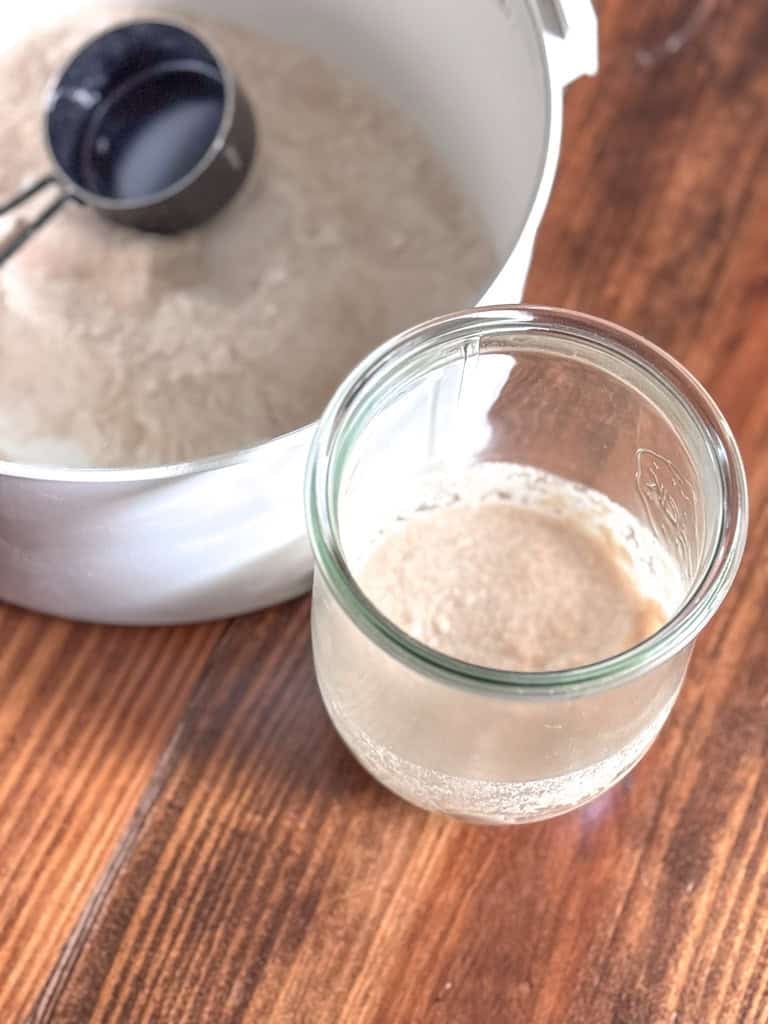
Two common feeding ratios are:
- 1:1:1 ratio
Starter : flour : water in equal parts, so for example 110 grams of each. - 1:2:2 ratio
Starter : flour : water with more fresh food for the starter.
In my kitchen, I typically use the 1:2:2 feeding ratio because it creates a stronger starter and helps balance the faster fermentation that comes from fresh milled flour.
A typical feeding for me looks like:
- ½ cup starter
- 1 cup fresh milled flour
- 1 cup filtered water
This method works well for maintaining an active starter that’s ready for baking.
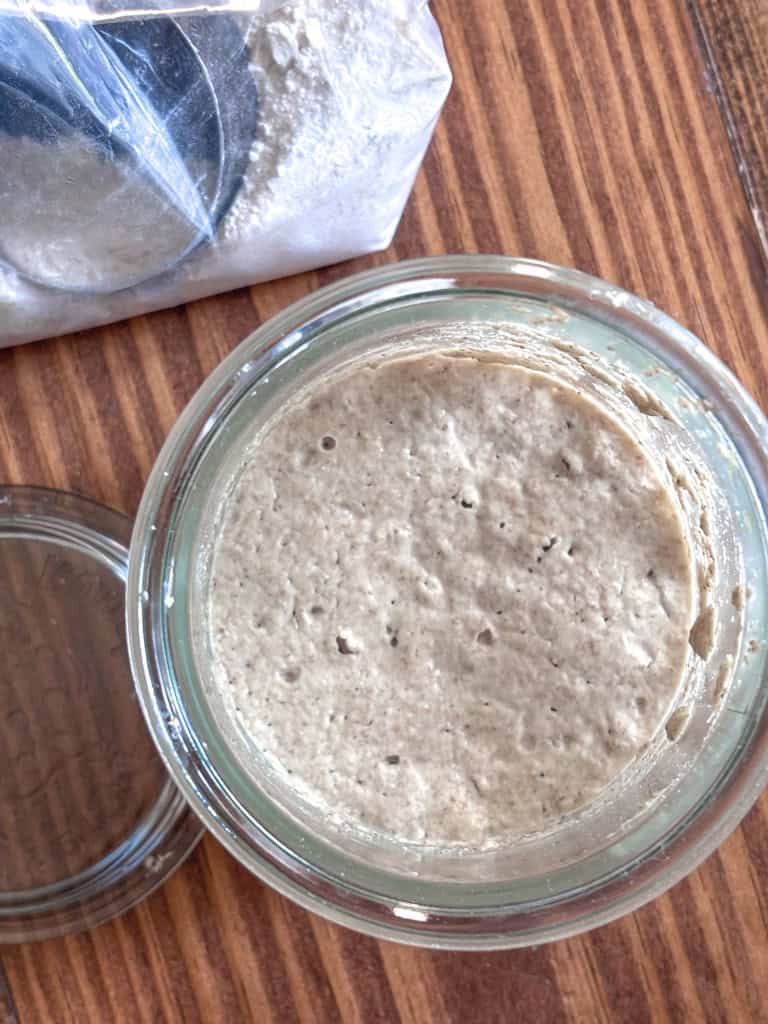
Visual Signs Your Starter Is Ready
Instead of watching the clock, I always recommend watching the starter itself. A healthy sourdough starter will show several clear signs of fermentation.
Look for:
• Bubbles throughout the starter (not as dramatic as starter fed with all-purpose flour, but I still see them)
• A slight dome forming on the top of your starter
• A pleasant tangy smell of the starter
• The starter rising close to double in size
Interestingly, fresh milled sourdough doesn’t always produce bubbles that look quite as dramatic as starters fed only white flour, but the fermentation activity is still very strong.
How Often Should You Feed a Fresh Milled Starter?
How often you feed your starter depends on where you store it.
- Room Temperature Storage—If your starter lives at room temperature on your counter, it should be fed about every 24 hours. Fresh milled flour can ferment faster because of the increased nutrient content. In my experience, my starter is usually fully active in about 3–4 hours, while starters fed with all-purpose flour often take closer to 4–6 hours. This faster fermentation is one of the things I love about fresh milled sourdough.
- Refrigerator Storage—If you bake less frequently, the refrigerator is a great place to store your starter. Cold temperatures slow down fermentation, so feeding once per week is usually enough. When you’re ready to bake, remove the starter from the refrigerator, feed it, and let it become active again before using it in your recipe.
How to Store a Fresh Milled Sourdough Starter
There are two main ways to store a starter.
- Counter Storage—This is the best option if you bake sourdough regularly. Keeping your starter on the counter allows the natural yeast to remain active and ready to use at any time. The trade-off is that it requires regular feeding. I keep mine in a simple glass jar with a rubber band around the outside to mark the level of the starter after feeding. This makes it easy to see how much it rises. Just make sure your starter isn’t placed in direct sunlight or near a strong heat source.
- Refrigerator Storage—For busy schedules, refrigerator storage works beautifully. Feed your starter, let it begin fermenting at room temperature for a bit, then move it to the refrigerator. When you’re ready to bake again, bring it out, feed it, and let it become active. This method keeps your precious sourdough starter healthy without requiring daily attention.
Signs Your Fresh Milled Starter Is Healthy
A healthy starter is surprisingly easy to recognize once you know what to look for.

The signs of a healthy starter include:
• Nearly doubling in size after feeding
• Plenty of bubbles
• A slightly tangy smell
• A soft, airy texture
If your starter ever develops fuzzy mold, a harsh smell, or unusual colors, it may be time to discard it and start fresh. But honestly, this is rare if you’re feeding regularly and keeping your starter clean.
FAQs: Fresh Milled Sourdough Starter
Yes, you can absolutely feed a sourdough starter with fresh milled flour. In fact, freshly milled flour often helps starters become more active because it contains more natural yeast and nutrients than store-bought flour. Whole grains like hard white or hard red wheat are especially good for strengthening a sourdough starter.
Hard white wheat and hard red wheat are the best grains for feeding a fresh milled sourdough starter. These grains contain higher protein and gluten levels, which help create a strong, active starter. Many bakers prefer hard white wheat for its mild flavor, while hard red wheat creates a more robust, traditional sourdough taste.
If your starter is kept at room temperature, it should be fed every 12–24 hours. If stored in the refrigerator, it only needs to be fed about once per week. Because fresh milled flour is very nutrient-dense, your starter may ferment faster than starters fed with store-bought flour.
Fresh milled flour absorbs more water than store-bought flour because it still contains the bran and germ of the wheat berry. This often makes the starter appear thicker. You can adjust the hydration by adding a little bit more water during feeding.
Yes! Sourdough discard from a fresh milled sourdough starter works perfectly in recipes like pancakes, muffins, biscuits, waffles, and quick breads. It adds incredible flavor while reducing waste.
Freshly milled flour contains more natural yeast, enzymes, and nutrients than aged flour from the store. These elements feed the yeast in your starter and often result in faster fermentation and more bubbling activity.
For best results, it’s ideal to mill flour fresh when feeding your starter. However, freshly milled flour can also be stored in the freezer for short periods and used later for feedings.
A starter is ready when it almost doubles in size within a few hours after feeding, contains plenty of bubbles, and smells pleasantly tangy. A slightly domed top and airy texture are also great indicators.
Recipes to Use Fresh Milled Sourdough Starter
Once you have a mature sourdough starter, the possibilities really open up.
Some of my favorite recipes include:
- Fresh Milled Sourdough Sandwich Bread
- Fresh Milled Sourdough Muffins
- Fresh Milled Sourdough Discard Pizza Dough
- Sourdough Cheddar Biscuits
These recipes are wonderful ways to use both active starter and sourdough discard while baking nourishing food for your family.
Final Thoughts
If you’re new to sourdough or new to fresh milled flour, I want to encourage you that this process truly is doable. My whole journey into from-scratch cooking started with sourdough. Learning how to care for a starter helped me realize that homemade food doesn’t have to be complicated or overwhelming. It can be simple, rhythmic, and deeply rewarding.

A fresh milled sourdough starter might sound intimidating at first, but once you understand feeding and hydration, it becomes incredibly predictable, and these starters are so resilient.
You learn the smell of the starter.
You recognize the bubbles.
You see the rise.
And before long, baking a homemade loaf of bread becomes part of the rhythm of your kitchen. It all begins with a simple jar of flour and water—and the decision to start.
Want more delicious recipes or guides sent straight to your inbox? Subscribe to my newsletter to receive the latest! If you make this recipe, please leave a rating on the recipe card below! I’d also love for you to tag me @autumn.chasingoursimple on Instagram so I can see what you’ve been baking!