Easy Sourdough Flatbread Recipe (Made with Sourdough Discard)


Last Updated on June 26, 2026 by Autumn Ballard
This easy sourdough flatbread recipe is made with sourdough discard and simple pantry ingredients. Ferment the dough overnight, then cook soft, flavorful flatbreads in just 5 minutes.
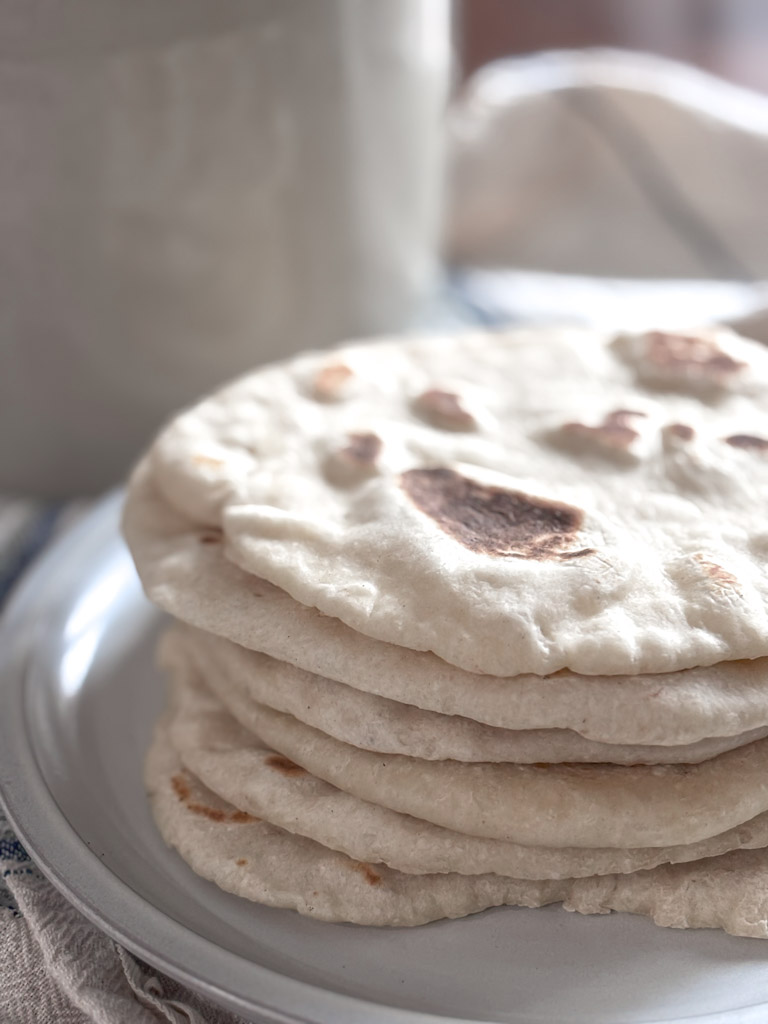
If you’ve ever wished you could turn a jar of sourdough discard into fresh homemade bread without heating up the oven, this sourdough flatbread recipe is for you. The dough comes together with simple pantry staples, ferments on the counter while you go about your day (or overnight), and cooks in just minutes in a hot skillet.
I love recipes like this because they fit real life. With just a little planning ahead, you can have warm, soft flatbread ready in about five minutes—perfect for wrapping sandwiches, serving alongside soup, dipping into hummus, or pairing with your favorite grilled meats. It’s become one of my favorite ways to use sourdough discard when I want homemade bread without the extra work.
What is Flatbread?
Flatbread is an unleavened bread typically made with simple ingredients like flour, water or dairy, and salt. It’s rolled out flat and cooked on the stovetop or in a brick oven.
Most common flat breads include naan bread, pita bread, and tortilla shells. Flatbread dough is simple to make, making it the perfect option for a fast, fresh bread that can be served with a variety of dips, meals, or as a base for pizzas.
Why You’ll Love This Recipe
A delicious way to use sourdough discard. Instead of throwing away extra discard, transform it into soft, flavorful flatbread your family will actually get excited about.
Only 5 minutes to cook. Once the dough has fermented, each flatbread cooks in just a few minutes on a hot skillet—no oven required.
Soft, chewy, and full of flavor. The long fermentation gives the flatbread a wonderful texture and subtle sourdough flavor that tastes even better than a quick flatbread recipe.
Perfect for meal planning. Mix the dough the night before or in the morning, let it ferment while you go about your day, then cook fresh flatbread just before dinner.
Versatile enough for any meal. Use it as wraps for lunch, serve it alongside soup or curry, make homemade pizzas, or simply enjoy it warm with butter or hummus.
Beginner-friendly. If you’re new to sourdough, this recipe is a wonderful place to start. There’s no complicated shaping, scoring, or baking techniques—just simple ingredients and a hot skillet.
This is one of those recipes that feels impressive but fits real life. With just a little planning ahead, you’ll have warm homemade flatbread on the table in minutes.
This post may contain affiliate links, which means I may earn a small commission at no extra cost to you if you make a purchase through these links. I only recommend products I personally use and trust. Your support helps keep this blog running—thank you!
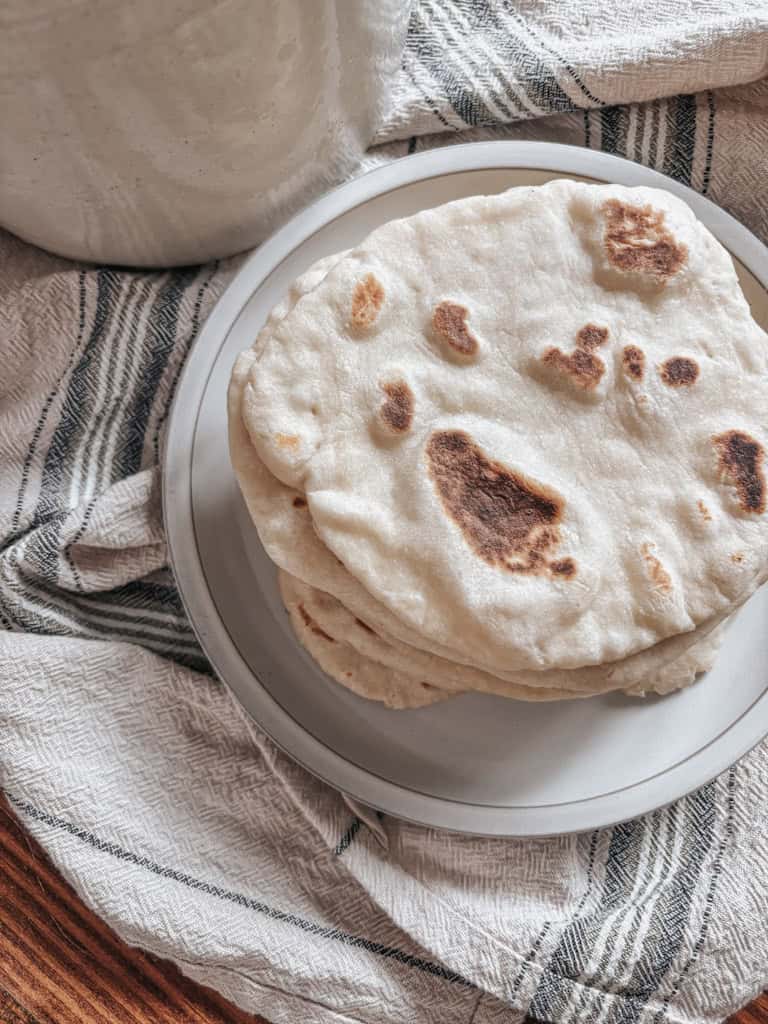
Why Ferment the Dough?
You might be wondering why this sourdough flatbread recipe needs to ferment for several hours if it uses sourdough discard. While the dough only takes about five minutes to cook, giving it time to rest is what creates its incredible flavor and texture.
As the dough ferments, the flour has time to fully hydrate, resulting in flatbread that’s softer, more tender, and easier to roll out. The sourdough discard also develops a deeper flavor during this time, giving the finished flatbread that subtle tang you expect from sourdough.
One of my favorite things about this recipe is that the fermentation happens while you’re living your life. Mix the dough before bed or first thing in the morning, then let it rest on the counter while you sleep, homeschool, run errands, or tackle your to-do list. By dinnertime, all that’s left to do is divide the dough and cook each flatbread for just a few minutes.
It’s a simple reminder that homemade food doesn’t have to mean standing in the kitchen all day. Sometimes the best recipes are the ones that quietly do most of the work on their own.
Ingredients
Key Ingredients
One of my favorite things about this sourdough flatbread recipe is how incredibly simple it is. You only need a handful of basic ingredients to make soft, flavorful flatbread at home. You can find the full list of ingredients and measurements in the recipe card below, but here are the stars of the recipe.
Sourdough Discard
This recipe is a wonderful way to use up extra sourdough discard instead of tossing it out. The discard adds a subtle tangy flavor and, after fermenting, helps create a soft, chewy flatbread that’s perfect for wraps, dipping, or serving alongside your favorite meals.
Plain Yogurt
Yogurt gives this flatbread its wonderfully tender texture while adding just a touch of richness. Combined with the sourdough discard, it creates a dough that’s easy to work with and produces incredibly soft flatbread every time. Plain yogurt or greek yogurt can be used in this recipe.
Olive Oil
A little olive oil goes a long way in this recipe. It helps keep the dough soft, adds flavor, and creates beautifully golden spots as the flatbread cooks in the skillet.
Flour
Simple all-purpose flour is all you need for this recipe. After the long fermentation, it transforms into a soft, pliable dough that’s easy to roll out and cooks in just a few minutes.
How To Make Sourdough Flatbread
Prepare the Dough
Add all of the wet ingredients to a large mixing bowl and combine. Then add the flour and salt. Stir together with your dough whisk or use your hands to incorporate everything together. You want to make sure there are no dry pieces, so mix well.
Let The Dough Rest
Cover the bowl with plastic wrap and leave it out at room temperature until it doubles in size. Times will vary but the warmer the kitchen, the faster it will rise.
Shape
Using a bowl scraper, remove the dough from the bowl and place it on your work surface or counter. Then, divide the dough into 8 equal pieces and form each piece into a ball. Cover it with a tea towel and let it rest while you prepare the skillet. *At this point, the dough could be refrigerated for up to 3 days covered in plastic wrap!
Would you like to save this?
Preheat and Roll the Dough
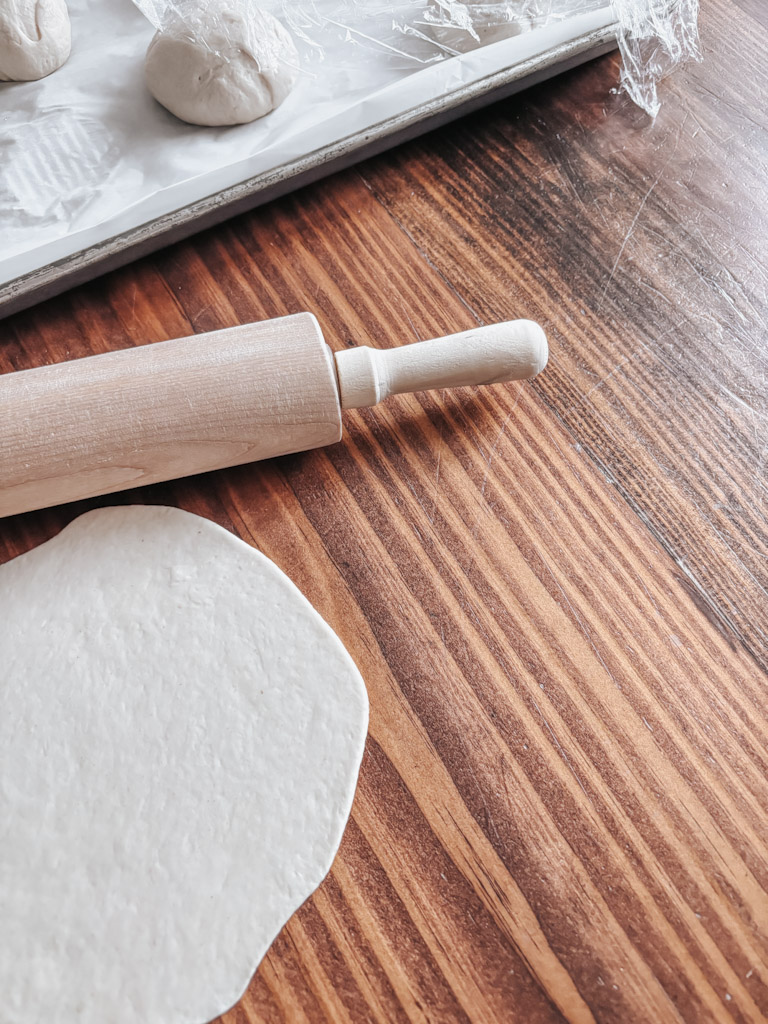
Heat a cast iron pan over medium heat for 5-10 minutes. You want the skillet to be hot when you add the dough. While the cast iron is heating, take each section of the dough and use a rolling pin to roll out the dough balls to about 1/8” thick—no need to make a perfect circle.
Cook the Flatbread
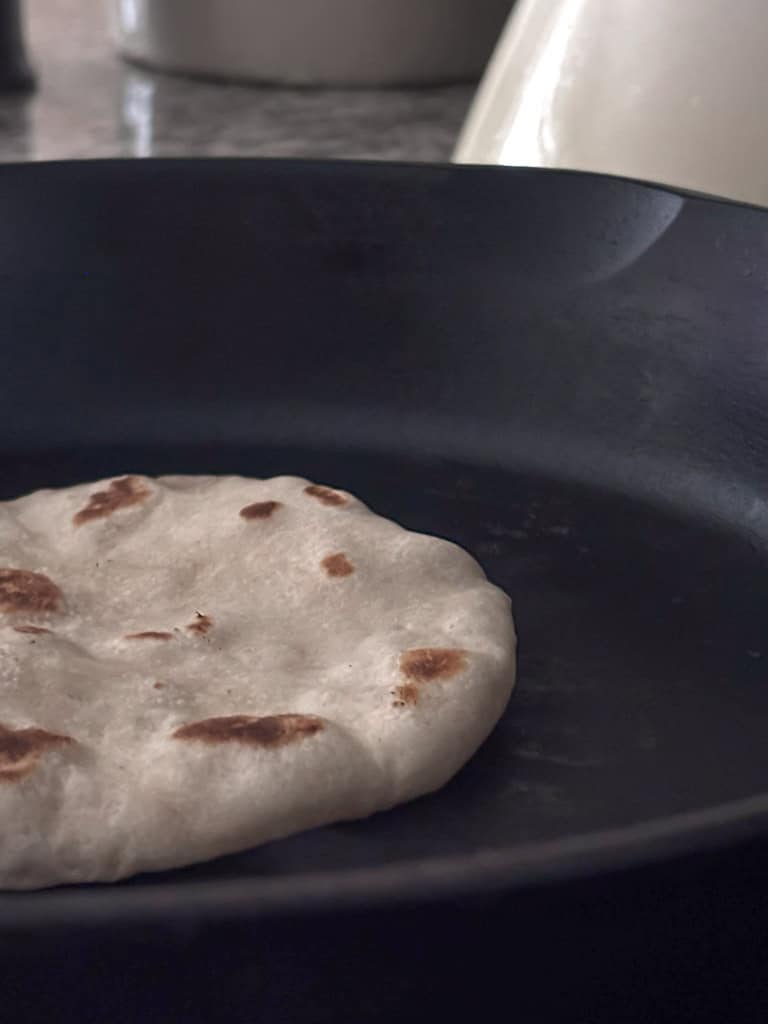
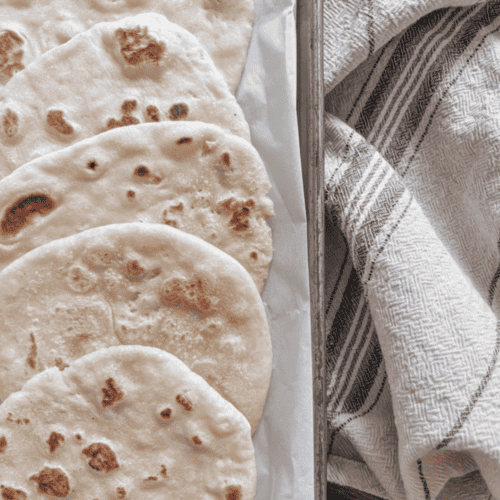
One at a time, add the rolled dough to the hot cast-iron skillet. Cook for about 2 minutes and then flip it over and cook for an additional minute. Flip it again and you should notice that the flatbread begins to get fluffy. Remove from the hot pan and serve warm!
Flavor Add-ins
To make your sourdough flatbread even more flavorful, consider adding a few basic ingredients to the dough or topping.
- Garlic- Brush on a little bit of melted butter and a sprinkle of garlic salt to make sourdough flatbread even more flavorful.
- Herbs- Add fresh herbs like rosemary or thyme to the dough or sprinkle on top.
- Cheese- Sprinkle some shredded parmesan cheese or mozzarella over the dough before baking or grilling. The cheese will melt and add a bit of crispiness to the edges.
Serving Suggestions
One of the reasons I make this sourdough flatbread recipe so often is because it’s incredibly versatile. The soft, chewy texture pairs well with just about any meal, making it an easy addition to breakfast, lunch, or dinner.
Here are some of our favorite ways to enjoy it:
Wraps and Sandwiches
Use the flatbread as a wrap for grilled chicken, turkey, roasted vegetables, or your favorite sandwich fillings. It’s soft enough to fold without tearing, making it a great alternative to store-bought wraps.
With Soups and Stews
Warm flatbread is the perfect companion to a bowl of soup, chili, or stew. Use it to soak up every last bit of broth or serve it alongside your favorite comfort meals.
Homemade Pizza
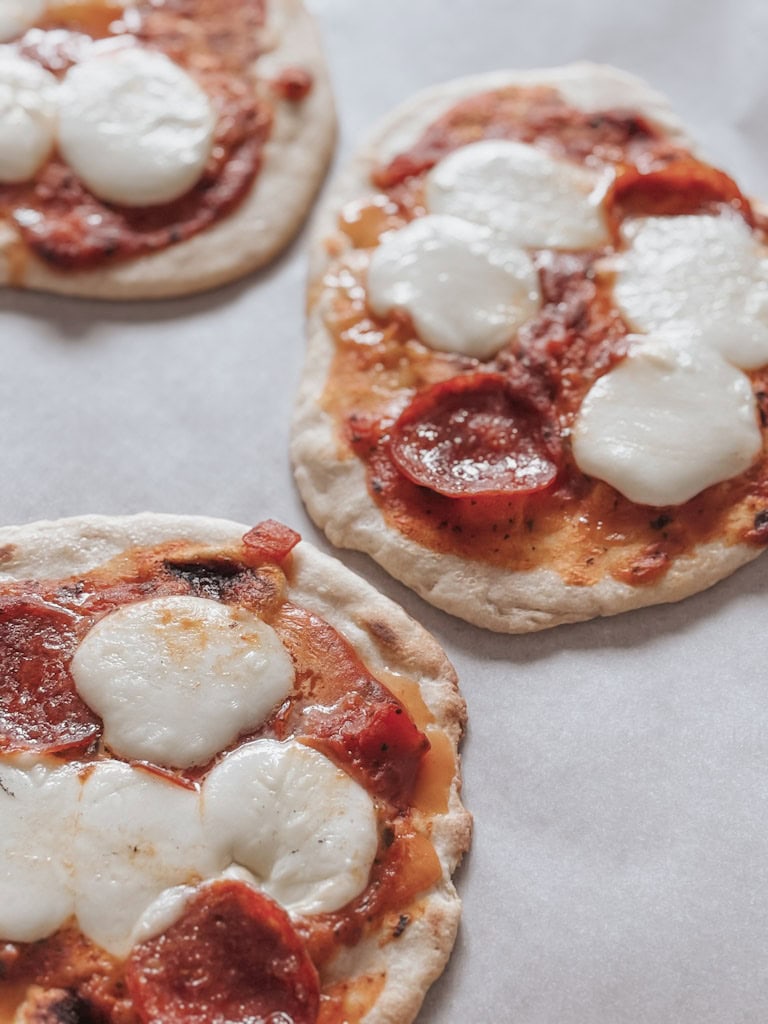
Turn your flatbread into a quick personal pizza by topping it with pizza sauce, cheese, and your favorite toppings. Bake until the cheese is melted for an easy weeknight meal.
Dips and Appetizers
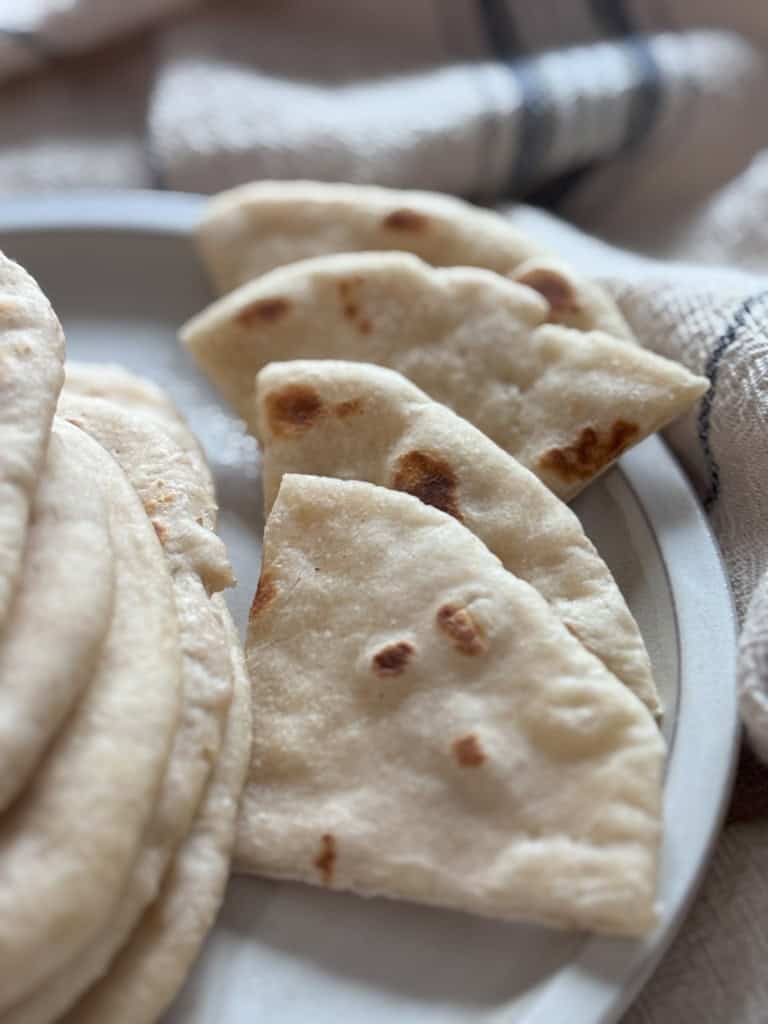
Slice the flatbread into wedges and serve it with hummus, tzatziki, spinach dip, whipped feta, or your favorite bean dip. It also makes a beautiful addition to a snack board or appetizer platter.
Taco or Gyro Night
Swap tortillas or pita for homemade sourdough flatbread the next time you make tacos, gyros, or Mediterranean-inspired bowls. The soft texture holds fillings beautifully while adding even more flavor.
Breakfast Flatbread
Spread warm flatbread with butter and honey, homemade jam, or nut butter for a simple breakfast. You can also use it to wrap scrambled eggs, sausage, and cheese for an easy breakfast on the go.
No matter how you serve it, this sourdough flatbread is one of those recipes you’ll find yourself reaching for again and again. It’s simple enough for busy weeknights but versatile enough to become a staple in your kitchen.
Sample Baking Schedule
I find sample baking schedules helpful but keep in mind that you can adjust the times to fit your schedule. What’s great about this recipe is that you can mix the dough before leaving for work and then make sourdough flatbread once it’s time for dinner!
8 am: Mix the dough
4:30 pm: Divide and shape
5:00 pm: Cook & Serve
Tips & Tricks for Perfect Flatbread
Thickness:
When making sourdough flatbread, the thickness of the dough can greatly affect the final result. If you roll the dough out thin, you’ll get a crispier flatbread with a delicate texture, perfect for dipping or using as a crunchy base for toppings.
If you prefer a softer, chewier flatbread, roll the dough a little thicker—this will create a more substantial bread that’s soft and fluffy on the inside, ideal for wraps or as a side to heartier dishes.
Cooking Variations:
There are several ways to cook your sourdough flatbread, each offering a unique texture. Try cooking your sourdough flatbread in a hot skillet, on a hot grill, or even in the oven at 450° for about 6-8 minutes.
Storage & Reheating Instructions
Sourdough discard flatbreads can be stored at room temperature. Once the flatbread has cooled, I typically place it inside a storage bag. You can also freeze it for longer storage by placing the flatbread in a freezer safe bag and freezing it for up to 3 months.
Flatbread can be enjoyed at room temperature but if you want to reheat it, simply reheat it on the stovetop or inside the oven. I do not recommend reheating it in the microwave as it will be chewy in texture.
If you try this recipe and love it, I would appreciate it if you took the time to leave a 5-star review. Be sure to tag me with your bakes!
Easy Sourdough Flatbread
Ingredients
- 1 cup sourdough discard
- 1/4 cup plain full-fat yogurt
- 1/2 cup whole milk
- 2 1/2 cups flour
- 1 tsp sea salt
Instructions
- Add all of the wet ingredients to a large mixing bowl and combine. Then add the flour and salt. Stir together with your dough whisk or use your hands to incorporate everything together. You want to make sure there are no dry pieces, so mix well.
- Cover the bowl with plastic wrap and leave it out at room temperature until it doubles in size. Times will vary but the warmer the kitchen, the faster it will rise.
- Using a bowl scraper, remove the dough from the bowl and place it on your work surface or counter. Then, divide the dough into 8 equal pieces and form each piece into a ball. Cover it with a tea towel and let it rest while you prepare the skillet. *At this point, the dough could actually be refrigerated for up to 3 days covered in plastic wrap!
- Heat a cast iron pan over medium heat for 5-10 minutes. You want the skillet to be hot when you add the dough. While the cast iron is heating, take each section of the dough and use a rolling pin to roll out the dough balls to about 1/8” thick—no need to make a perfect circle.
- One at a time, add the rolled dough to the hot cast iron skillet. Cook for about 2 minutes and then flip it over and cook for an additional minute. Flip it again and you should notice that the flatbread begins to get fluffy. Remove from the hot pan and serve warm! *You can add a little olive oil to the pan if you feel you need it but I did not.